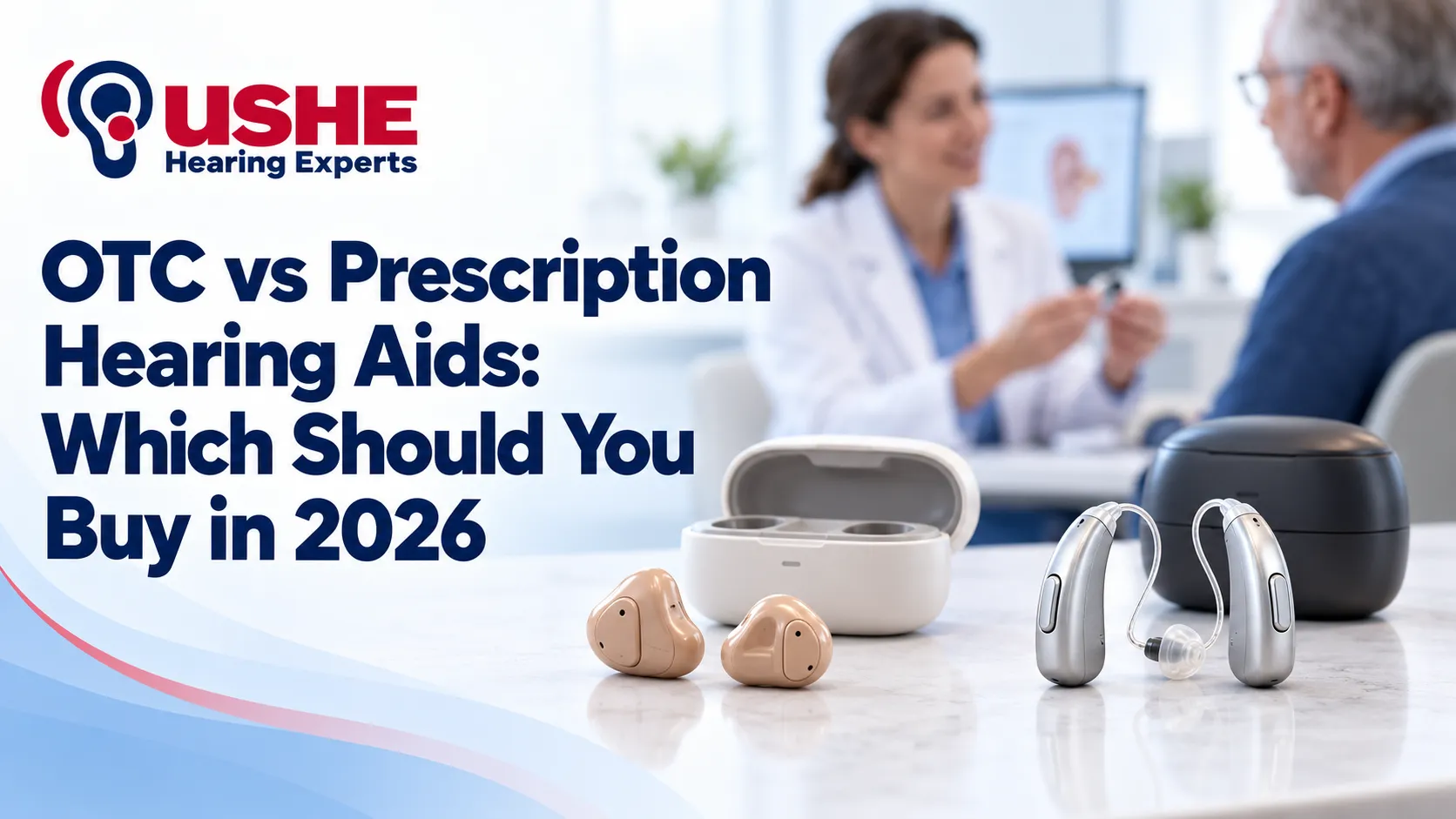
OTC vs Prescription Hearing Aids: Which Should You Buy in 2026?

For adults with mild to moderate hearing loss who want a lower-cost, self-managed start, OTC hearing aids can be a fair choice. Prescription hearing aids fit anyone with more severe loss, trickier hearing patterns, or a wish for professional programming. Many OTC pairs run from $149 to $2,950, while prescription models at USA Hearing Experts are listed from $699 up.
Picture a 46-year-old project manager (a hypothetical example, call her Dana) who keeps asking colleagues to repeat themselves on video calls. She spots a $199 box at the drugstore and gets a $3,000 quote from a clinic, and wonders whether the gap is real. It is, but not always in the way ads suggest.
This guide walks through what separates the two, using our OTC hearing aids overview as a starting point, so you can decide without guessing.
The Short Version
- OTC hearing aids are for adults 18 and older with perceived mild to moderate hearing loss.
- Prescription hearing aids are programmed by a licensed professional and can suit every level of loss.
- OTC usually costs less up front, but you handle setup and tweaks yourself.
- Certain ear symptoms mean you should see a doctor before buying either type.
What Is the Difference Between OTC and Prescription Hearing Aids?
The core difference is who sets them up. OTC devices are sold in stores and online with no exam, while prescription devices come through a licensed hearing professional.
The FDA created the OTC category in October 2022. These devices are air-conduction aids for adults 18 and older who feel they have mild to moderate hearing loss. Prescription aids are simply everything else, and they can be programmed to your exact test results.
| OTC | Prescription | |
|---|---|---|
| Who it’s for | Adults 18+, mild to moderate loss | All ages, all levels of loss |
| Hearing test needed? | No | Yes, usually a report you can share |
| Setup | You, often via an app | A professional programs them |
| Typical price | $149 to $2,950 per pair | $699 to $3,500+ as listed |
Who Should Choose OTC Hearing Aids?
OTC suits you if your trouble is mostly in noisy rooms and you are comfortable with an app. Think of the person who misses half the conversation at a packed Thanksgiving table but hears fine at home.
Self-fitting models let you run an in-app hearing check and adjust sound yourself. That freedom is great if you like tinkering. It is less great if you would rather hand the whole job to someone else.
Who Needs Prescription Hearing Aids Instead?
Prescription aids are the safer route when your loss is more than mild or when anything about your ears feels unusual. The FDA is blunt that OTC devices are not meant for severe or profound loss, because their output is capped.
Please see a doctor, preferably an ENT, before buying either type if you notice any of these:
- Fluid, pus, or blood coming from an ear in the past six months
- Ear pain, or heavy earwax you can’t clear
- Dizziness or vertigo alongside hearing trouble
- Sudden hearing change, or loss that worsens then improves
- Hearing loss or ringing in only one ear
Also, if you struggle to follow speech in a quiet room, OTC probably won’t be enough. Honestly, that’s a good reason to get a proper hearing test.
How Much Do OTC and Prescription Hearing Aids Cost in 2026?
OTC aids generally cost less, with listed prices running from $149 to $2,950 per pair depending on brand and features. Prescription aids cost more, but the price often covers professional guidance and more advanced sound processing.
At USA Hearing Experts, listed prescription prices vary by model and configuration. Here are a few examples from our shop:
| Model | Listed price |
|---|---|
| Oticon Chilli SP 9 BTE | $699 to $1,398 |
| Signia Styletto 7AX SLIM-RIC kit | $1,699 to $3,049 |
| Oticon Intent 1 miniRITE | $1,899 to $3,499 |
Most private insurers and Original Medicare don’t typically cover hearing aids, so check your plan and budget as if you’re paying out of pocket. Look at the total cost of ownership, not just the sticker. A cheaper device you stop wearing costs more than a pricier one you wear daily.
Find Your Fit Before You Spend
Whether you lean OTC or prescription, a quick conversation with an audiologist can save you from an expensive guess. Our team can look at an existing hearing test report and point you toward a style that matches your lifestyle and budget.
Book Your Free Hearing Test | Shop Prescription Hearing Aids
What About Fitting, Support, and Returns?
OTC means you are your own audiologist. That works for some people, but a poor fit or wrong setting can leave an aid sounding off and sitting unused.
With prescription devices from USA Hearing Experts, you can share your hearing test report and get model guidance from an audiologist online. Most hearing aids can be returned within 30 days of delivery under our return and refund policy. Custom-programmed aids may not qualify, and a restocking fee can apply, so read the terms before ordering.
Which Should You Buy? A Simple Decision Path
Start with your symptoms, not the price tag. Then match the aid to your comfort with technology.
- Choose OTC if you’re 18+, your loss feels mild, none of the red flags above apply, and you enjoy managing settings yourself.
- Choose a prescription if your loss is moderate to severe, you hear poorly in quiet, one ear is worse, or you want an expert to tune the sound.
- Not sure? Get a hearing test first. A report in hand makes either choice smarter.
Conclusion
OTC hearing aids opened a real door for adults with mild to moderate loss, and for the right person they are a sensible, budget-friendly start. But they aren’t a shortcut around a proper check when symptoms are unusual or hearing is worse than you thought. If you want professional programming and expert guidance, prescription hearing aids remain the stronger fit, and we’re happy to help you compare options with a free online consultation.
FAQs
Q: What is the main difference between OTC and prescription hearing aids?
A: OTC aids are bought without an exam and set up by you, for adults with perceived mild to moderate loss. Prescription aids are programmed by a licensed professional and suit all levels of hearing loss and all ages.
Q: Are OTC hearing aids good enough for most adults?
A: They can work well for mild to moderate loss in people comfortable using an app. They aren’t designed for severe or profound loss.
Q: How much do OTC hearing aids cost compared with prescription?
A: OTC pairs are commonly listed from $149 to $2,950. Prescription models at USA Hearing Experts are listed from about $699 into the thousands, depending on model and technology level.
Q: Do I need a hearing test before buying OTC hearing aids?
A: No, the FDA does not require an exam or fitting. A test is still smart, especially if you have ear pain, one-sided loss, or sudden changes.
Q: Does insurance or Medicare cover hearing aids?
A: Most private insurers and Original Medicare don’t typically cover them, so check your own plan and plan to pay out of pocket.