Best Hearing Aids for Tinnitus 2026: A Complete Buyer’s Guide

Key Takeaways
- Tinnitus relief hearing aids combine amplification with built-in sound therapy features.
- Prescription devices from brands like Phonak, Widex, Signia, Oticon, ReSound, and Starkey offer the most advanced tinnitus programs.
- You can also buy hearing aids online for mild-to-moderate hearing loss with tinnitus.
- A proper hearing evaluation is the most important step before buying anything.
- Combining hearing aids with counseling or sound therapy improves long-term results.
Table of Contents
What Is Tinnitus, and Why Do Hearing Aids Help?
Tinnitus is the perception of sound ringing, buzzing, hissing, or clicking without an external source. It’s not a disease itself; it’s usually a symptom of hearing loss, noise exposure, or age-related changes in the inner ear.
Here’s the connection most people miss: about 90% of tinnitus cases occur alongside some degree of hearing loss. When your brain isn’t getting enough sound input, it can “turn up the volume” on internal signals, and that’s the ringing you hear.
Hearing aids help in two ways:
- Amplification restores missing sound input, which reduces the brain’s focus on tinnitus.
- Built-in sound generators produce gentle background noise (white noise, ocean sounds, and fractal tones) that masks or distracts from the ringing.
How to Choose the Best Hearing Aid for Tinnitus: Step-by-Step
- Get a hearing test. A licensed audiologist measures your hearing loss and tinnitus pattern.
- Discuss your tinnitus sound. High-pitched ringing vs. low hums may respond to different masking tones.
- Try devices with tinnitus features during a trial period (most clinics offer 30–60 days).
- Compare price, warranty, and follow-up care, not just the sticker price.
- Ask about app control and Bluetooth streaming if you want to adjust masking sounds from your phone.
- Consider OTC vs. prescription based on your hearing loss severity
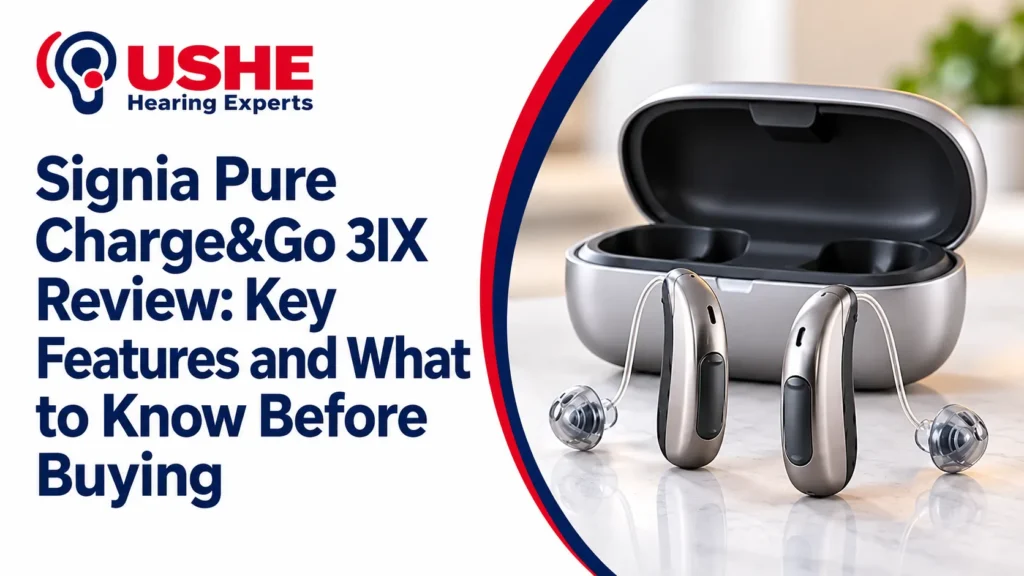
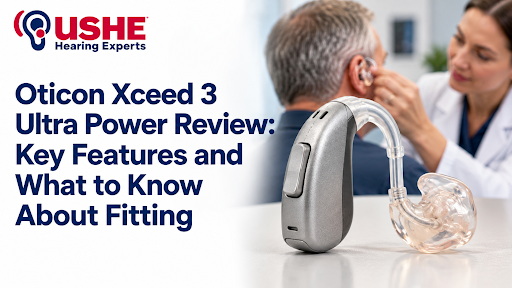
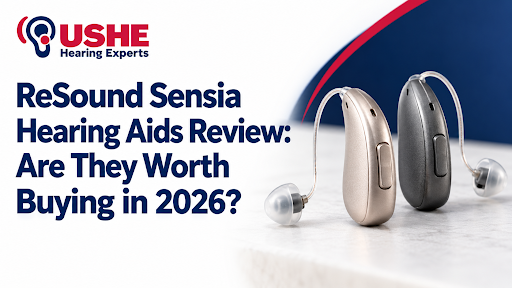
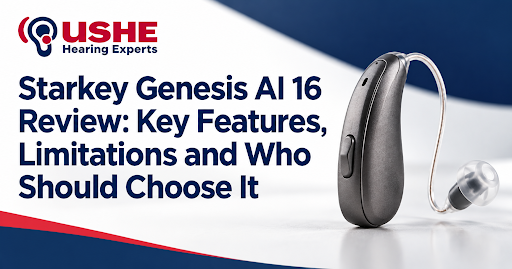
Best Hearing Aids for Tinnitus in 2026 (Comparison Table)
Here is a simple difference comparison table to make things clearer.
|
Model |
Style |
Tinnitus Feature |
Price Range (per unit)* |
|---|---|---|---|
|
BTE |
Built-in Tinnitus Support + remote control |
$1,480 – $2,960 |
|
|
BTE |
Noise management + Tinnitus Sound Support |
$2,830 – $5,670 |
|
|
RIC |
Rechargeable, adjustable soundscapes |
$1,999 – $3,700 |
|
|
RIC |
AI-powered noise reduction, Bluetooth streaming |
$2,222 – $4,444 |
|
|
Slim RIC |
Rechargeable, app-controlled sound profiles |
$1,699 – $3,049 |
Prescription vs. OTC Hearing Aids for Tinnitus
Prescription Hearing Aids
Pros:
- Custom-programmed by an audiologist for your exact hearing loss and tinnitus pitch
- Advanced masking and app features
- Ongoing professional support and adjustments
Cons:
- Higher upfront cost
- Requires an in-person or tele-audiology appointment
OTC (Over-the-Counter) Hearing Aids
Pros:
- Lower cost, easy-to-buy hearing aids online
- No appointment required for mild-to-moderate hearing loss
- Good starting point for basic amplification
Cons:
- Limited or no dedicated tinnitus masking programs
- Not self-fitting for complex tinnitus cases
- No professional follow-up unless purchased through a hybrid provider
Expert tip: If your tinnitus is severe, sudden, one-sided, or paired with dizziness, skip OTC devices and see an audiologist first; this could signal an underlying medical issue.
Common Mistakes People Make When Buying Tinnitus Hearing Aids
- Buying based on price alone instead of matching features to your tinnitus type
- Skipping the hearing test and guessing at settings
- Expecting instant silence – most people notice gradual improvement over weeks
- Ignoring the trial period offered by most clinics
- Not asking about the return/exchange policy before purchase
Myths vs. Facts About Hearing Aids and Tinnitus
|
Myth |
Fact |
|---|---|
|
Hearing aids cure tinnitus |
They manage and reduce awareness of tinnitus; there is no universal cure |
|
Only expensive devices help |
Mid-range devices with proper fitting often work just as well |
|
Tinnitus only affects older adults |
Noise exposure is causing tinnitus in younger adults too |
|
OTC hearing aids treat all types of tinnitus |
OTC devices work best for mild cases without complex masking needs |
|
You'll hear results overnight |
Most patients see steady improvement over 4–8 weeks of consistent use |
Benefits of Using Hearing Aids for Tinnitus Relief
- Reduces the brain’s focus on internal ringing through better sound input
- Improves speech understanding in noisy environments
- Many models sync with smartphones for personalized masking sound control
- Reduces stress, sleep disruption, and concentration issues linked to tinnitus
- Long-term use is associated with better emotional well-being in tinnitus patients
Finding a Hearing Specialist Near You
If you’re in the US, look for a licensed audiologist offering tinnitus-specific evaluations, not just standard hearing tests. At USA Hearing Experts, partner clinics offer free consultations and trial periods before you commit to a purchase.
Conclusion:
Tinnitus doesn’t have to control your daily life. The right hearing aid, matched to your hearing loss and tinnitus pattern, can genuinely reduce the ringing and help you reconnect with conversations, music, and quiet moments.
Ready to find your fit? Schedule a free tinnitus and hearing consultation with USA Hearing Experts today, or browse our online catalog to compare devices from top brands.
FAQ
No, properly fitted hearing aids do not worsen tinnitus. Poor fitting or excessive volume can cause temporary discomfort, so professional fitting matters.
Widex, Phonak, Signia, Oticon, ReSound, and Starkey all offer strong tinnitus-specific programs; the best choice depends on your hearing loss and tinnitus pitch.
Prescription devices typically range from $1,480 to $7,000 per pair, while OTC options start much lower, often under $2,000.
technology tiers include built-in sound generators or masking programs.
notice gradual improvement within 4–8 weeks of consistent daily use.
Often yes, up to 90% of tinnitus cases occur alongside some degree of hearing loss.