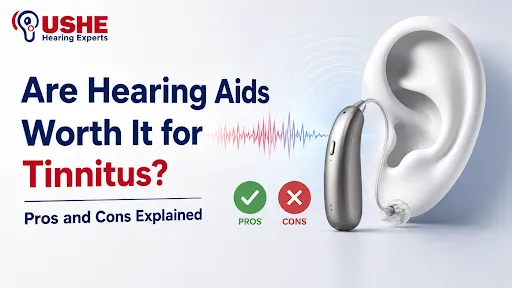
Are Hearing Aids Worth It for Tinnitus? Pros and Cons Explained

That constant ringing, buzzing, or hissing sound in your ears that nobody else can hear-if you deal with tinnitus, you already know how exhausting it can be. It shows up during quiet moments and makes it harder to focus, and for a lot of people, it gets worse at night when everything else goes silent.
If you have been told you also have some degree of hearing loss, you might have come across the idea of using hearing aids for tinnitus. It sounds a little surprising at first, since hearing aids are usually associated with hearing better, not with quieting a sound that is already too loud in your head. In this blog, we will explain how this actually works, walk through the different hearing aid type options that help with tinnitus, and lay out the honest pros and cons so you can decide if this route makes sense for you.
Summary
Hearing aids can genuinely help many people manage tinnitus, especially when tinnitus occurs alongside some degree of hearing loss, which is fairly common. By amplifying outside sounds and, in many models, playing soft background noise, hearing aids can make the ringing feel less noticeable and reduce the mental strain of straining to hear over it. They are not a cure and will not work the same way for everyone, since tinnitus causes and severity vary widely from person to person. Still, for many, hearing aids for tinnitus offer real, practical relief, and understanding both the pros and cons ahead of time helps set realistic expectations before making a decision.
Key Takeaways
- Tinnitus and hearing loss often occur together, which is why hearing aids can help manage both.
- Hearing aids for tinnitus work by amplifying outside sound and, in many models, adding gentle background noise.
- Not every hearing aid type includes tinnitus-specific features, so it is worth checking before buying.
- Hearing aids do not cure tinnitus, but many users report noticeably reduced awareness of the ringing.
- Results vary by person, since tinnitus has many different causes and severity levels.
- A proper hearing test and consultation with an audiologist is the best way to know if this approach fits your situation.
Table of Contents
Understanding the Link Between Tinnitus and Hearing Loss
Tinnitus is often described as ringing, buzzing, hissing, or clicking sounds that only you can hear, and it is not actually a condition on its own; it is usually a symptom of something else going on with your hearing system. A large number of people who experience tinnitus also have some level of hearing loss, even if they have not noticed it clearly, since the two conditions frequently develop together, often linked to age, noise exposure, or changes in the inner ear.
This connection is exactly why hearing aids come up so often in tinnitus conversations. When the brain is not receiving enough outside sound due to hearing loss, it sometimes fills in the gap with phantom sounds, and that is often what tinnitus actually is. Restoring that outside sound input through a hearing aid can, for many people, reduce how noticeable the internal ringing feels.
How Do Hearing Aids for Tinnitus Actually Work?
There are a couple of ways hearing aids can help manage tinnitus, and understanding the mechanism makes the whole idea feel a lot less confusing.
- Sound amplification. By making outside sounds clearer and louder, hearing aids give your brain more to focus on, which can naturally push tinnitus into the background. Built-in sound therapy. Many modern hearing aids include a tinnitus masking feature that plays soft, soothing background sounds, like gentle white noise or nature sounds, to help distract from the ringing.
- Reduced listening strain. When hearing loss makes conversations harder to follow, the brain works overtime, which can actually make tinnitus feel more noticeable. Easing that strain through amplification can indirectly reduce tinnitus awareness.
- Combined therapy approach. Some audiologists combine hearing aid use with sound therapy programs and counselling for a more complete tinnitus management plan.
Hearing Aid Type Options for Tinnitus Support
Not every hearing aid type offers the same level of tinnitus support, so it helps to know what is available.
|
Hearing Aid Type |
Tinnitus Support Level |
Best Suited For |
|---|---|---|
|
Often includes tinnitus-masking features |
Moderate to severe hearing loss with tinnitus |
|
|
Commonly includes built-in sound therapy options |
Mild to moderate hearing loss, everyday comfort |
|
|
In the Ear (ITE) |
Varies by brand and model |
Users wanting a larger, easier-to-handle device |
|
In the Canal (ITC) |
Available in select advanced models |
Users wanting a smaller, more discreet fit |
|
Limited tinnitus features due to smaller size |
Users prioritising invisibility over extra features |
|
|
Combination devices |
Specifically designed for both hearing loss and tinnitus |
Users needing dedicated sound therapy alongside amplification |
If tinnitus relief is a priority for you, it is worth specifically asking your audiologist which hearing aid type and model include dedicated tinnitus masking or sound therapy features, since not all do.
Pros of Using Hearing Aids for Tinnitus
- Can noticeably reduce awareness of tinnitus by providing more outside sound for the brain to focus on
- Many models include built-in tinnitus masking sounds designed specifically for this purpose.
- Improves hearing loss symptoms at the same time, addressing two issues with one device
- Reduces mental fatigue caused by straining to hear, which can also reduce tinnitus intensity. Non-invasive and reversible, since you can simply remove the device if it does not suit you
- Can be combined with other tinnitus management approaches like counselling or sound therapy for better results
Cons of Using Hearing Aids for Tinnitus
- Not a permanent cure; tinnitus may still be noticeable in very quiet environments even with a hearing aid
- Not every hearing aid type includes tinnitus-specific features, so research and guidance matter
- Results vary significantly from person to person, since tinnitus has many different underlying causes
- Devices with tinnitus masking features can cost more than standard models
- Requires an adjustment period, since getting used to wearing a hearing aid daily takes some time
- Not effective for tinnitus unrelated to hearing loss, such as certain medical or vascular causes, which need a different treatment approach
Who Benefits Most from Hearing Aids for Tinnitus
Hearing aids tend to help most when:
- Tinnitus occurs alongside diagnosed hearing loss, rather than as an isolated symptom
- The tinnitus becomes more noticeable in quiet settings, suggesting a link to reduced outside sound input
- You struggle with both hearing conversations clearly and managing constant ringing at the same time
- You are open to trying built-in sound therapy features alongside amplification
If your tinnitus exists without any measurable hearing loss, it is still worth discussing with an audiologist or doctor, since other tinnitus management approaches may be more suitable for your specific case.
What to Expect During the Process
- A detailed hearing test to check for hearing loss alongside your tinnitus symptoms
- A conversation with your audiologist about how and when your tinnitus feels most noticeable
- A recommendation on hearing aid type and whether tinnitus masking features would help your specific situation
- A trial period, where possible, to see how your tinnitus responds to amplification and sound therapy
- Follow-up visits to fine-tune settings based on your ongoing experience
Conclusion
So, are hearing aids worth it for tinnitus? For many people dealing with both hearing loss and tinnitus together, the honest answer is yes, they can genuinely help reduce how noticeable that constant ringing feels, especially when the device includes built-in sound therapy features. That said, hearing aids are not a guaranteed cure, and results depend heavily on the underlying cause and severity of your tinnitus.
The best way to know if this approach is right for you is a proper hearing test and an honest conversation with a certified audiologist, who can walk you through the right hearing aid type and features based on your specific situation. Our team at USA Hearing Experts is here to help you figure out whether hearing aids for tinnitus make sense for you, without the guesswork.
Frequently Asked Questions (FAQs)
Yes, for many people, especially those who also have hearing loss, hearing aids for tinnitus can reduce how noticeable the ringing feels by amplifying outside sound and, in many models, adding gentle background noise.
No, not every hearing aid type includes this feature. It is important to specifically ask your audiologist about tinnitus masking or sound therapy options before choosing a device.
No, hearing aids are not a cure. They can help manage and reduce awareness of tinnitus, but the ringing may still be noticeable, especially in very quiet environments.
Tinnitus and hearing loss frequently occur together, since reduced outside sound input can lead the brain to generate phantom ringing or buzzing sounds.
Behind-the-ear and receiver-in-canal styles often include stronger tinnitus masking features, though this varies by brand and model, so it is worth confirming with your audiologist.
Hearing aids are generally most effective when tinnitus occurs alongside hearing loss. If your hearing is normal, other tinnitus management approaches may be more suitable.
This varies by person, but many users report a noticeable difference within the first few weeks, especially with continued daily use and proper fitting adjustments.