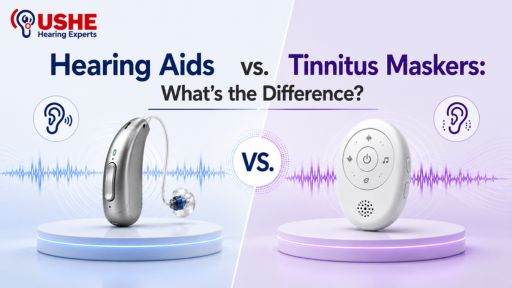
Hearing Aids vs. Tinnitus Maskers: What’s the Difference?

If you’ve been researching hearing aids vs. tinnitus maskers, you’ve probably seen the two described almost interchangeably. They’re not the same thing, and picking the wrong one is a common and expensive mistake.
They solve different problems. One replaces the sound your ears aren’t picking up. The other adds sound your ears don’t need but your brain finds soothing. Which helps you depends almost entirely on whether you also have hearing loss and many people with tinnitus don’t know whether they do.
Summary
A hearing aid amplifies the world around you. When your ears stop delivering certain frequencies, your brain often fills the silence with ringing, and restoring those missing sounds can make tinnitus less noticeable by bringing the surrounding sounds back into focus.
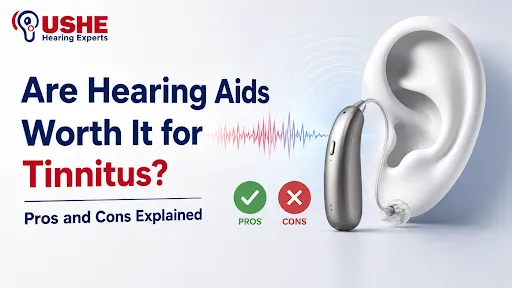
A tinnitus masker, or ear-level sound generator, works differently. Instead of amplifying outside sounds, it plays a soft, steady sound to draw your attention away from the ringing, with little or no amplification. Hearing aids are generally better suited to people with measurable hearing loss, while tinnitus maskers may be an option for people with normal hearing who experience bothersome tinnitus.
Many premium hearing aids now include a built-in tinnitus sound generator, giving you both amplification and sound therapy in one device. Your hearing test results are therefore an important starting point for deciding whether a hearing aid, tinnitus masker, or a combination approach makes the most sense.
Key Takeaways
- Hearing aids amplify external sound; maskers add soothing sound instead
- Most people with tinnitus also have some degree of hearing loss
- Hearing aids suit tinnitus with hearing loss; maskers suit tinnitus with normal hearing
- Combination devices do both, and are what most people end up using
- Brand approaches differ fractal tones, notch therapy, adjustable generators
- There’s no cure for tinnitus, but it can usually be made far less intrusive
- Hearing aid prices are often listed per device, not per pair
- One-sided or pulsing tinnitus needs prompt medical evaluation
Table of Contents
First, What Tinnitus Actually Is
Tinnitus is the perception of sound when nothing external is producing it ringing, buzzing, hissing, sometimes whooshing. It’s a symptom, not a disease in itself.
Here’s the part that matters for your decision: most people with tinnitus also have some degree of hearing loss, often in higher frequencies where they haven’t noticed a problem. That isn’t a coincidence. When the ear stops sending certain signals to the brain, the brain tends to generate activity of its own to fill the gap.
There’s no cure for tinnitus. Anyone selling you one isn’t being straight with you. What there is and this part is encouraging is a well-established set of ways to make it far less intrusive.
How Hearing Aids Help With Tinnitus?
Hearing aids weren’t designed as tinnitus treatments. They help anyway, for two reasons.
First, they restore the ambient sound you’ve been missing. A quiet room isn’t actually quiet. There’s a refrigerator hum, distant traffic, air moving. When hearing loss strips those away, your tinnitus has nothing to compete with. Turn those sounds back on and the ringing stops being the loudest thing in your head.
Second, hearing aids reduce listening effort. Straining to follow conversation all day is exhausting, and fatigue reliably makes tinnitus feel worse.
The American Tinnitus Association notes that hearing aids with integrated sound generators are particularly well suited to tinnitus patients with measurable hearing loss while noting fairly that results vary and the research isn’t definitive.
Best for: People whose hearing test shows measurable hearing loss alongside their tinnitus.
What a Tinnitus Masker Actually Does
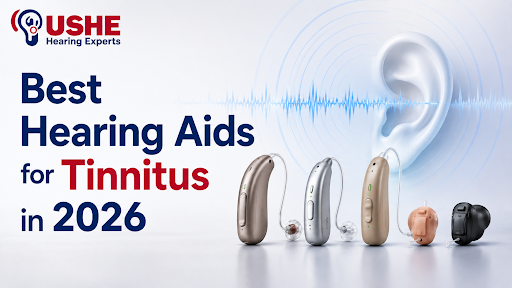
A tinnitus masker, properly an ear-level sound generator looks a lot like a hearing aid. The difference is under the hood. It provides little or no amplification, and instead plays a soft, continuous sound: white noise, broadband noise, ocean-type sounds, sometimes gentle tones.
The goal isn’t to drown out the tinnitus. It’s to give your brain something else to attend to, and over time reduce how much the ringing stands out.
Because it doesn’t amplify, a masker suits someone whose hearing tests normal but whose tinnitus is bothersome. In that situation a hearing aid has nothing useful to amplify.
Best for: People with normal or near-normal hearing and intrusive tinnitus, and people who mainly struggle at night or in quiet rooms.
Hearing Aids vs. Tinnitus Maskers: Key Differences
|
Feature |
Hearing Aids |
Tinnitus Maskers |
|---|---|---|
|
Main Purpose |
Improve hearing and reduce tinnitus awareness |
Make tinnitus less noticeable |
|
Best For |
People with hearing loss and tinnitus |
People with normal hearing and bothersome tinnitus |
|
How It Works |
Amplifies missing or soft sounds |
Produces soft sounds to distract from tinnitus |
|
Amplification |
Yes |
Little or none |
|
Tinnitus Relief |
Can reduce tinnitus awareness |
Helps mask or distract from ringing |
|
Hearing Test Needed |
Recommended |
Recommended |
|
Sound Generator |
Available in many modern models |
Core function |
|
Bluetooth |
Available in many models |
Depends on device |
|
Cost |
Generally higher |
Often more affordable |
|
Best Choice |
When tinnitus occurs with hearing loss |
When tinnitus occurs without significant hearing loss |
The Option Most People End Up With
Here’s what usually happens in practice, and it surprises people: you don’t have to choose.
Nearly every premium hearing aid sold today includes a built-in sound generator. These are combination devices. They amplify conversation like a normal hearing aid and can play tinnitus relief sound on top, adjustable through a phone app.
For someone with both hearing loss and tinnitus the majority of people asking this question that’s usually the sensible answer.
How the Brands Approach It Differently
The tinnitus features are not all the same, which is worth asking your audiologist about specifically.
Widex uses fractal tones, gentle, chime-like sounds that never quite repeat, which some people find less monotonous than white noise. Signia offers notch therapy, working quietly in the background rather than adding audible sound. ReSound, Oticon and Starkey provide adjustable sound generators with app control, letting you change intensity and sometimes pitch yourself. None is automatically best. Different tinnitus responds to different approaches, and matching them is what a hearing test and an audiologist conversation should decide.
A Note on Cost
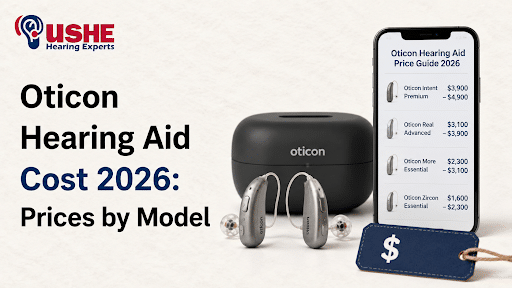
Prices depend on brand, technology level and how many ears you’re treating. One point worth understanding before you compare anything: hearing aid prices are often listed per device, not per pair. On our site the Oticon Intent 1 runs $1,899 for one ear and $3,499 for the pair, and the Starkey Evolv AI 2400 RIC R runs $2,222 for one and $4,444 for two.
That lower figure is a single hearing aid, and most people with hearing loss in both ears need two. When a price looks unusually good against a clinic quote, check which number you’re looking at.
When You Should See a Professional
Some tinnitus needs medical attention rather than a device. Book an appointment promptly, if your tinnitus is only in one ear, if it pulses in time with your heartbeat, or if it arrives with sudden hearing loss, dizziness, ear pain or drainage. These patterns warrant evaluation, not a masker.
Otherwise, start with a full hearing evaluation including speech testing. That single test answers the question this article is about: do you have measurable hearing loss, or not? Everything else follows.
Conclusion
Choosing between hearing aids and tinnitus maskers starts with a hearing test. If you have hearing loss, hearing aids can improve hearing while making tinnitus less noticeable. If your hearing is normal, a dedicated tinnitus masker or sound generator may be more suitable.
At USA Hearing Experts, we offer tinnitus-capable hearing aids from Oticon, Signia, Widex, ReSound, and Starkey at competitive prices, with free programming, US shipping, and a 30-day return window.
Send us your hearing test report to find the right hearing aid and technology level for your needs. Call (469) 432-4011 or visit USA Hearing Experts to compare models or request an audiologist consultation.
Frequently Asked Questions (FAQs)
Hearing aids amplify sound from your environment, tuned to your specific hearing loss. Tinnitus maskers provide little or no amplification and instead play a soft, steady sound to make the ringing less noticeable. Hearing aids treat hearing loss; maskers manage the perception of tinnitus. Many modern hearing aids now include both functions.
Hearing aids don't cure tinnitus, and no device does. What they often do is make it far less noticeable by restoring the everyday sounds your ears have been missing, so the ringing no longer stands out in quiet. Results vary between individuals, which is why a trial period matters.
Usually not. Most premium hearing aids include a built-in sound generator your audiologist can activate and adjust. Before buying a separate device, ask whether your current hearing aids already have tinnitus relief available. Many wearers have the feature and have never had it switched on.
There's no single best brand. Widex uses fractal tones, Signia offers notch therapy, and ReSound, Oticon and Starkey provide app-adjustable sound generators. Different tinnitus responds to different approaches, so the right choice depends on your test results and what feels comfortable during a trial.
See a professional promptly if your tinnitus is in one ear only, pulses with your heartbeat, or comes with sudden hearing loss, dizziness, ear pain or drainage. These patterns need medical evaluation rather than a device. Otherwise, a full hearing evaluation is the right first step.
Ready to Find Your Perfect Oticon with USA Hearing Experts?
We offer a free comprehensive hearing test, a trial of both Oticon Own AND Oticon Zeal, real-world testing guidance, an honest comparison, flexible financing, and expert audiologists.