
Are Rechargeable Hearing Aids More Expensive? Compare Upfront and Ongoing Costs

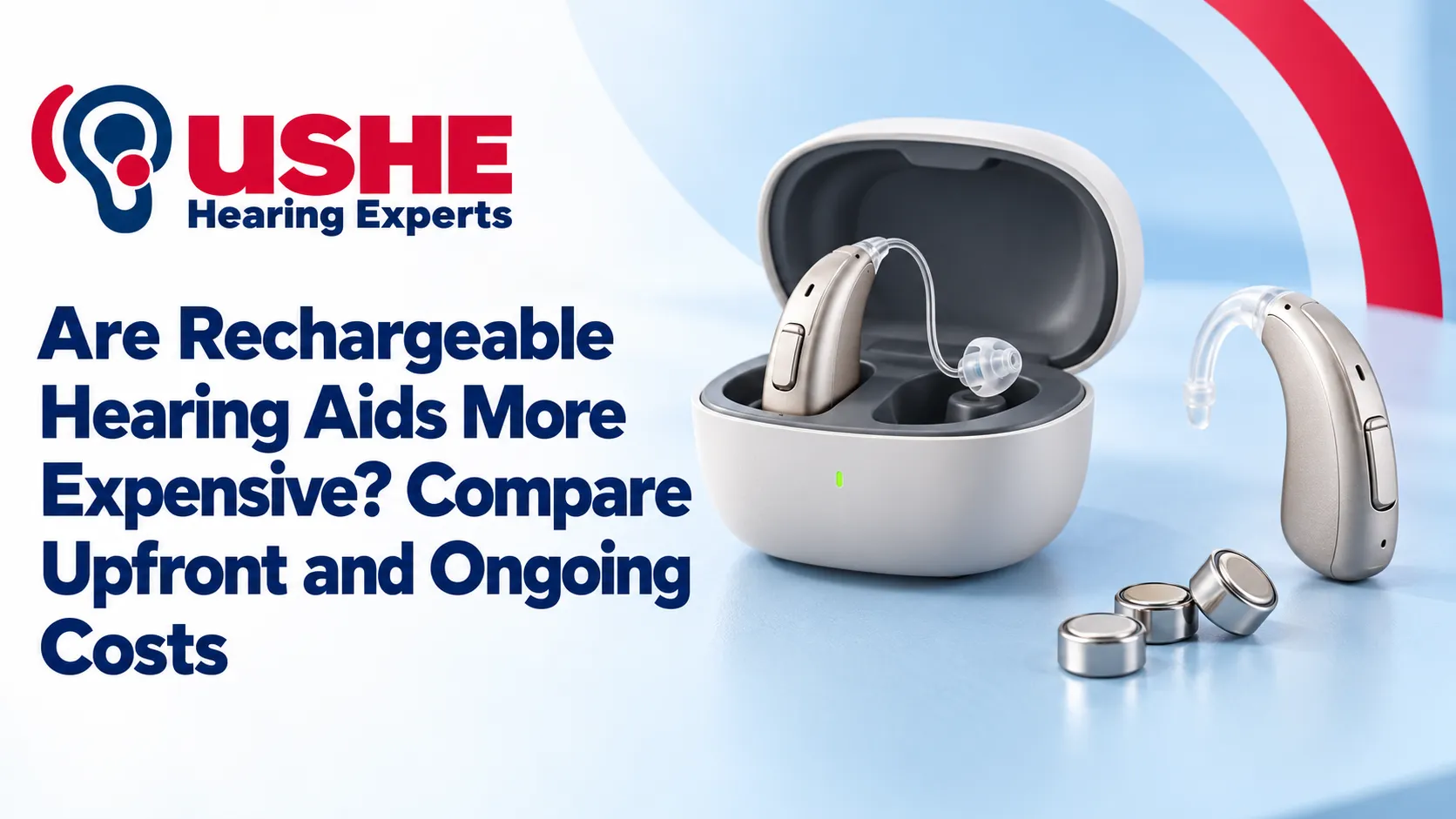
Yes, but only slightly upfront. In our Starkey listings, rechargeable versions run about $23 to $100 higher than the same level with disposable batteries. Disposable models add recurring battery purchases, while rechargeables may need a built-in battery replaced after several years, so the right choice depends on your habits.
Two hearing aids can look nearly identical online. One uses tiny batteries, the other sits in a charger overnight, and the rechargeable Starkey model costs a little more. Is that extra money a smart move or just a nicer-sounding feature?
We compared matching models on our site and added up the batteries. Here’s what the numbers actually say.
Summary
Rechargeable hearing aids usually cost somewhat more upfront than the same model with disposable batteries. But disposable batteries are a recurring expense, and rechargeables trade that for a built-in battery that lasts several years. Your hearing test, daily habits and comfort with charging matter more than a small price gap.
Key Takeaways
- Same-level rechargeable models cost about $23 to $100 more in our Starkey listings
- Disposable batteries cost roughly $5 to $20 per pack, according to the National Council on Aging (NCOA)
- Rechargeable batteries last several years before needing replacement
- Replacement and charger costs vary, so ask before you buy
- Prices on our pages don’t say whether they’re per ear or per pair
Are Rechargeable Hearing Aids More Expensive Upfront?
Usually, yes, but not by much. Our site lists matching Starkey Evolv AI models with a disposable battery and with a rechargeable battery, which lets us compare like for like.
| Starkey Evolv AI model | Disposable battery | Rechargeable | Difference |
|---|---|---|---|
| 1600 RIC | $1,169 to $2,199 | $1,249 to $2,222 | +23 high end |
| 1600 BTE | $1,169 to $2,199 | $1,249 to $2,222 | +23 high end |
| 2000 BTE | $1,699 to $2,849 | $1,749 to $2,949 | +100 high end |
The ranges reflect product options, and the pages don’t say whether prices are per ear or per pair. Ask what comes in the box, since a charger matters for the real cost.
What Do Disposable Batteries Cost Over Time?
They add up quietly. NCOA says a standard pack of disposable batteries runs anywhere from $5 to $20, and that a size 312 battery typically lasts 3 to 10 days.
Here’s an illustration with clear assumptions. Say you wear a pair, each battery lasts 7 days and a pack holds 6 batteries.
| Time | Batteries needed | Estimated cost at $5 to $20 per pack |
|---|---|---|
| 1 year | About 104 | About $87 to $347 |
| 5 years | About 520 | About $433 to $1,733 |
Do Rechargeable Hearing Aids Have Hidden Costs?
A few, and they’re worth knowing. The built-in lithium-ion batteries don’t last forever. NCOA says they’re designed to last several years, and UNC Health puts it at about 3 to 5 years.
When the battery finally wears out, it generally needs to be replaced by the manufacturer or a hearing care provider rather than by you. We couldn’t find a standard replacement price, so ask about it before you buy. Frequent travelers may also want a travel charger, according to UNC Health.
Which Costs Less Over Five Years?
Often the rechargeable may come out ahead, but not always. A $23 to $100 upfront premium is small beside several hundred dollars of batteries, yet an out-of-pocket battery replacement could narrow the gap.
| Your situation | Likely better fit |
|---|---|
| You wear aids all day and stream a lot | Rechargeable |
| Stiff fingers make tiny batteries a struggle | Rechargeable |
| You often forget to charge | Disposable |
| You camp, travel off-grid or prefer a quick swap | Disposable |
| You want the lowest sticker price | Compare both versions |
For more on how rechargeable power fits into today’s designs, see our guide to modern hearing aids.
Is a Rechargeable Hearing Aid Worth It for You?
For many people it is, because charging is one habit instead of constant battery shopping. UNC Health points out that rechargeable models can’t be switched back to standard batteries, so a missed charge means a silent hearing aid.
You can compare rechargeable options in our Signia Pure Charge&Go IX range. A disposable model still makes sense if you like having a spare in your pocket.
What Else Should You Know Before You Buy?
Shipping is free in the US, and returns or exchanges are available within 30 days, subject to the conditions in our return policy. A 10 to 15 percent restocking fee may apply, and you generally pay return shipping unless the item is defective.
Send us your hearing test report and our team can help match a style and battery type to your results. If your hearing changes suddenly, or is much worse in one ear, see a medical professional before buying anything.
Conclusion
Are rechargeable hearing aids more expensive? But disposable models carry a steady battery habit that, by our illustrative math, can run from several hundred to well over a thousand dollars over five years, while rechargeables carry the unknown of a built-in battery replacement after several years. Neither choice is wrong, and the better one is the one you’ll actually keep up with every day. Compare the full cost, including the charger and any service, then choose the version that fits your routine and your hearing test.
Ready to Compare Your Options?
At USA Hearing Experts, we help you match a style and battery type to your hearing test results. Send us your report and we’ll explain your choices and confirm your price.
Call (469) 432-4011 or contact our team online.
Frequently Asked Questions
Are rechargeable hearing aids more expensive than battery ones?
Usually a little. In our Starkey Evolv AI listings, rechargeable versions are about $23 to $100 higher than the same level with disposable batteries. The pages don’t say whether prices are per ear or per pair.
How much do disposable hearing aid batteries cost?
NCOA says a standard pack typically costs from $5 to $20. A size 312 battery usually lasts 3 to 10 days, so a year of wear can add up to hundreds of dollars for a pair, depending on use.
How long do rechargeable hearing aid batteries last?
NCOA says built-in rechargeable batteries are designed to last several years. UNC Health puts it at about 3 to 5 years, and Soundly’s audiologist guidance says 4 to 6 years.
Can you replace rechargeable hearing aid batteries yourself?
Generally no. The batteries are built in and are replaced by the manufacturer or a hearing care provider. Ask about replacement options and costs before you buy.
Are rechargeable hearing aids worth the extra cost?
For many people, yes, because the upfront gap is small and you avoid regular battery purchases and swaps. If you often forget to charge, a disposable model may suit you better.