
Modern Hearing Aids: What Has Changed and Which Features Matter?

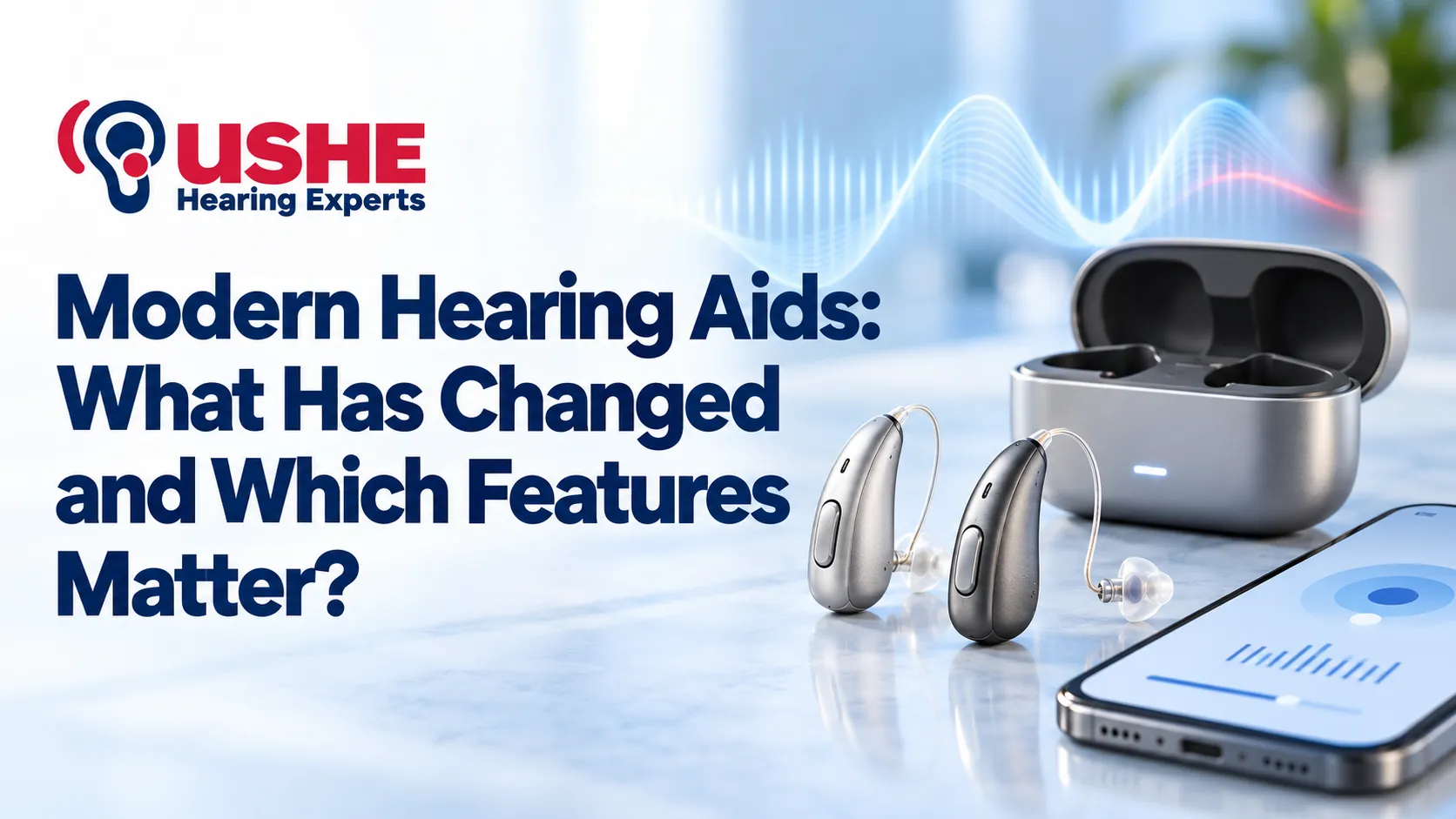
Modern hearing aids differ from older ones mainly in four ways: rechargeable batteries, smartphone streaming, AI-assisted sound processing and app-based adjustments. For most buyers, rechargeability, a good fit and noise handling matter most. At USA Hearing Experts, the modern models in this guide are listed from $699 to $3,899.
Picture a 42-year-old who finds his dad’s old hearing aid in a kitchen drawer: beige, chunky, a whistle waiting to happen. (This is a hypothetical example.) Then he looks at a rechargeable Oticon Intent online and wonders whether it’s even the same kind of device.
It’s not, really. Here’s what has changed, which features earn their price and which ones mostly look good on a spec sheet.
Summary
Today’s hearing aids charge overnight, stream calls and TV, adjust through a phone app and use sensors or AI to react to your surroundings. Not every feature is worth paying for. Rechargeable power, solid noise handling and a professional-quality fit usually matter more than the longest feature list.
Key Takeaways
- Hearing aids today are rechargeable, connected and app-controlled
- AI and sensors adapt the sound, but they don’t restore normal hearing
- Fit and your hearing test matter more than the number of features
- Auracast is promising, but its benefits are still early
- Modern models listed here run from $699 to $3,899
How Are Modern Hearing Aids Different From Older Ones?
The biggest shift is that they act like small computers. Older aids mostly made everything louder, while modern ones sort sounds, connect to phones and update through apps.
| Then | Now |
|---|---|
| Tiny disposable batteries | Rechargeable batteries and charging cases |
| Wired or neck-loop phone solutions | Direct streaming from compatible phones |
| Adjustments only at the clinic | Phone app for volume and programs |
| Basic noise reduction | Sensors and AI that adapt to the room |
The National Institute on Deafness and Other Communication Disorders (NIDCD) says about 15% of American adults report some trouble hearing, so these upgrades reach a lot of people.
Do Rechargeable Hearing Aids Really Matter?
For many people, yes. No small batteries to swap means one less chore, which helps if your fingers are stiff or your mornings are rushed.
Our Oticon Intent page says its rechargeable battery lasts a full day, even with heavy streaming, and charges overnight in the case. Our Signia Pure Charge&Go IX pages list a 36-hour battery runtime on a single charge, and a charging case that can recharge the aids up to three times on the go. You can browse the Signia Pure Charge&Go IX range to see the options.
What Does AI Actually Do in a Hearing Aid?
It helps the aid decide what to emphasize. Oticon describes its Reveal family as Dual AI: a Speech AI that identifies and enhances speech, and a Context AI that balances the surrounding sounds. Our Oticon Intent page describes built-in sensors that detect movement, environment and conversation dynamics, which adjust settings automatically.
That’s useful, but let’s stay honest. AI makes sound easier to work with, and it doesn’t give you back normal hearing. A professional fitting still does a lot of the heavy lifting, and you can compare the Oticon Reveal levels if you want to see where AI features sit across price tiers.
Which Connectivity Features Are Worth Having?
Direct phone streaming is the one most people use daily. Our Oticon Intent page lists streaming for calls, music, podcasts and TV audio, plus tap-to-answer. Its Companion app lets you adjust volume, change programs and install updates from a smartphone or Apple Watch.
Two others are worth knowing about:
- Bluetooth LE Audio and Auracast. The Bluetooth SIG says Auracast aims to deliver better audio in public places for people who use hearing aids. A 2022 Hearing Review article expected benefits but noted they were still unknown, so treat it as promising rather than proven.
- Telecoil. This connects to loop systems in places like theaters. Oticon lists tele loop compatibility for Reveal.
Which Features Matter Most, and Which Matter Less?
Start with how you live. A feature only matters if you’ll use it weekly.
| Feature | How much it matters | Why |
|---|---|---|
| Professional fitting and programming | A lot | Settings must match your hearing test |
| Rechargeable battery | A lot for most | Saves daily hassle |
| Noise handling | A lot | Restaurants and gatherings are the usual pain point |
| Phone streaming | Medium to high | Great if you take calls or watch TV |
| App control | Medium | Handy, but not essential |
| Auracast | Low for now | Needs supporting venues and devices |
| Extra programs | Low | More isn’t always better |
How Much Do Modern Hearing Aids Cost at USA Hearing Experts?
Prices vary by family and technology level. The product pages don’t say whether prices are per ear or per pair, so confirm with our team before ordering.
| Model family | Style | Listed price |
|---|---|---|
| Signia Pure Charge&Go IX | Receiver-in-canal, rechargeable | $699 to $3,499 |
| Oticon Intent (levels 1 to 4) | Receiver-in-canal, rechargeable | $1,299 to $3,499 |
| Oticon Reveal (levels 1 to 4) | Receiver-in-canal, rechargeable | $1,149 to $3,899 |
Shipping is free in the US, and returns or exchanges are available within 30 days, subject to the conditions in our return policy, which may include a restocking fee.
How Should You Choose?
Begin with your hearing test, then your daily life. If you’re often in noisy rooms, put noise handling first. If you’re on the phone all day, put streaming first.
Send us your hearing test report and our team can explain which levels make sense for you. If your hearing changes suddenly, or is much worse in one ear, see a medical professional before buying anything.
Conclusion
Modern hearing aids are rechargeable, connected, app-controlled and increasingly shaped by AI, which is a long way from the beige devices in old kitchen drawers. But the best model isn’t the one with the most features, and it’s the one that matches your hearing test, fits comfortably and does the things you do every week. Rechargeability, noise handling and professional programming usually earn their place, while newer extras like Auracast are worth watching rather than paying extra for today. Start with your results and your routine, and the right feature list tends to sort itself out.
Ready to Find Your Fit?
At USA Hearing Experts, we help you match modern hearing aids to your hearing test results. Send us your report, and we’ll explain your options and confirm your price.
Call (469) 432-4011 or contact our team online.
Frequently Asked Questions
What are modern hearing aids?
Modern hearing aids are digital devices that are usually rechargeable, stream audio from phones and use app control. Many also use sensors or AI to adapt to the environment. They help make sound more usable but don’t restore normal hearing.
Which hearing aid features matter most?
A professional fit, rechargeable power and good noise handling matter most for many people. Phone streaming and app control are valuable if you use them daily. Newer extras like Auracast are still early.
Are rechargeable hearing aids better than battery ones?
Rechargeables remove the hassle of changing tiny batteries, which many people prefer. Our Signia Pure Charge&Go IX pages list a 36-hour runtime on a single charge. The right choice still depends on your routine and your hearing test.
What does AI do in hearing aids?
AI helps the aid sort and balance sounds, such as enhancing speech while keeping surroundings in balance. Oticon describes its Reveal family as using Speech AI and Context AI. It improves usability but doesn’t replace a proper fitting.
How much do modern hearing aids cost?
At USA Hearing Experts, the modern rechargeable families in this guide are listed from $699 to $3,899, depending on model and technology level. The pages don’t say whether prices are per ear or per pair, so contact our team to confirm.

